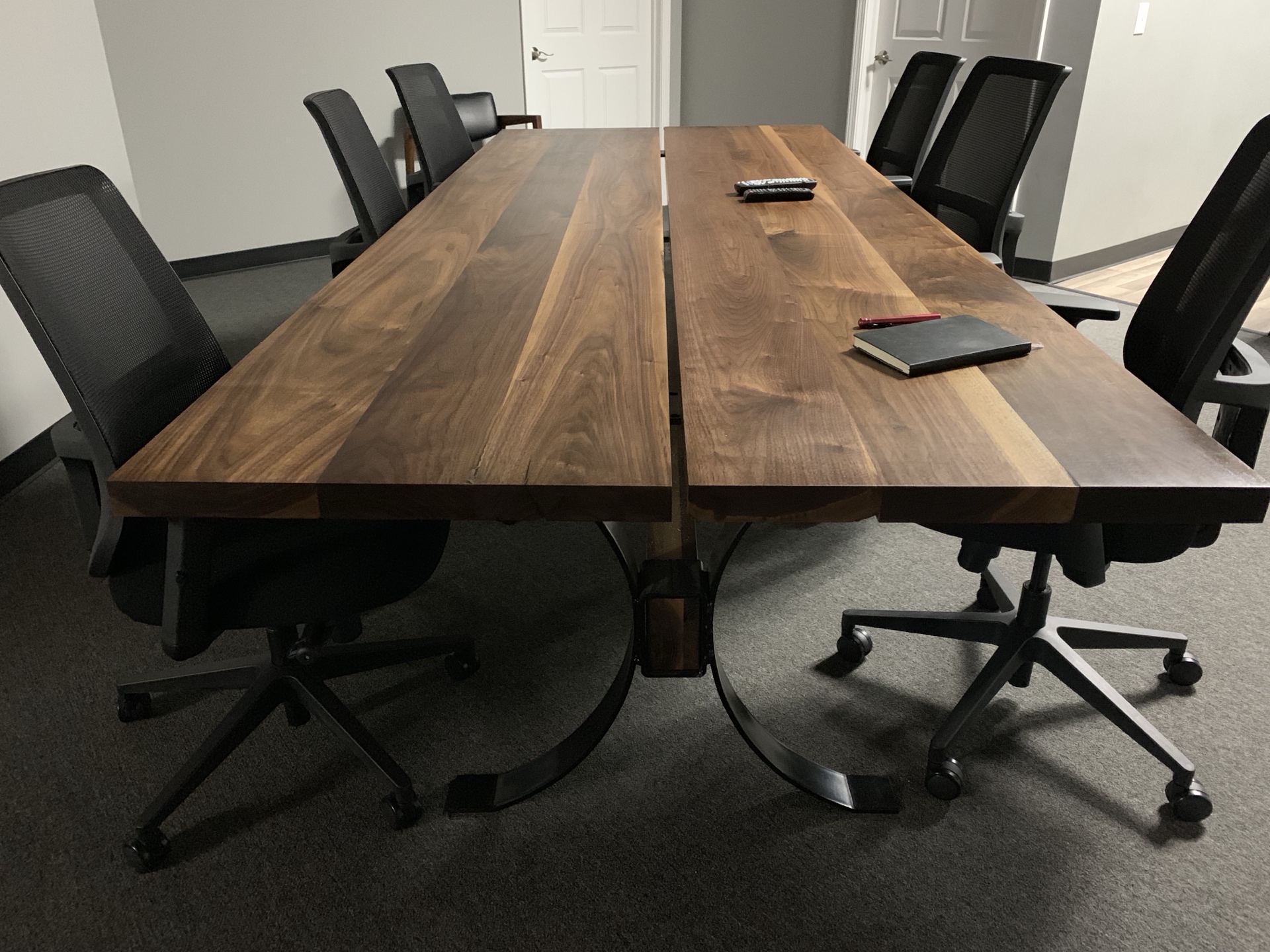
Walnut does not need to announce itself to own a room.
A conference table is where a company gathers, presents, and makes decisions. For that reason, its material should feel settled rather than fashionable. American black walnut brings warmth and depth to a space without turning the room into a display case. It has long been used for fine furniture, and each board gives the maker a distinct visual vocabulary to work with.[1]
Color movement
Warm brown tones shaped by the selected boards
Grain story
Figure and orientation that set the table’s visual pace
Lasting direction
A material language that suits a modern heirloom
01 · Start With Character
The species is only the beginning.
“Walnut” is not a finished visual decision. One selection may be calm and architectural; another may reveal dramatic color movement or figure. The work begins with looking at the boards together: their grain direction, their contrast, their rhythm across a long surface, and how the table should read from every chair in the room.
That selection is what keeps a custom table from feeling generic. It gives the top an identity that belongs to the office and the people who gather there.
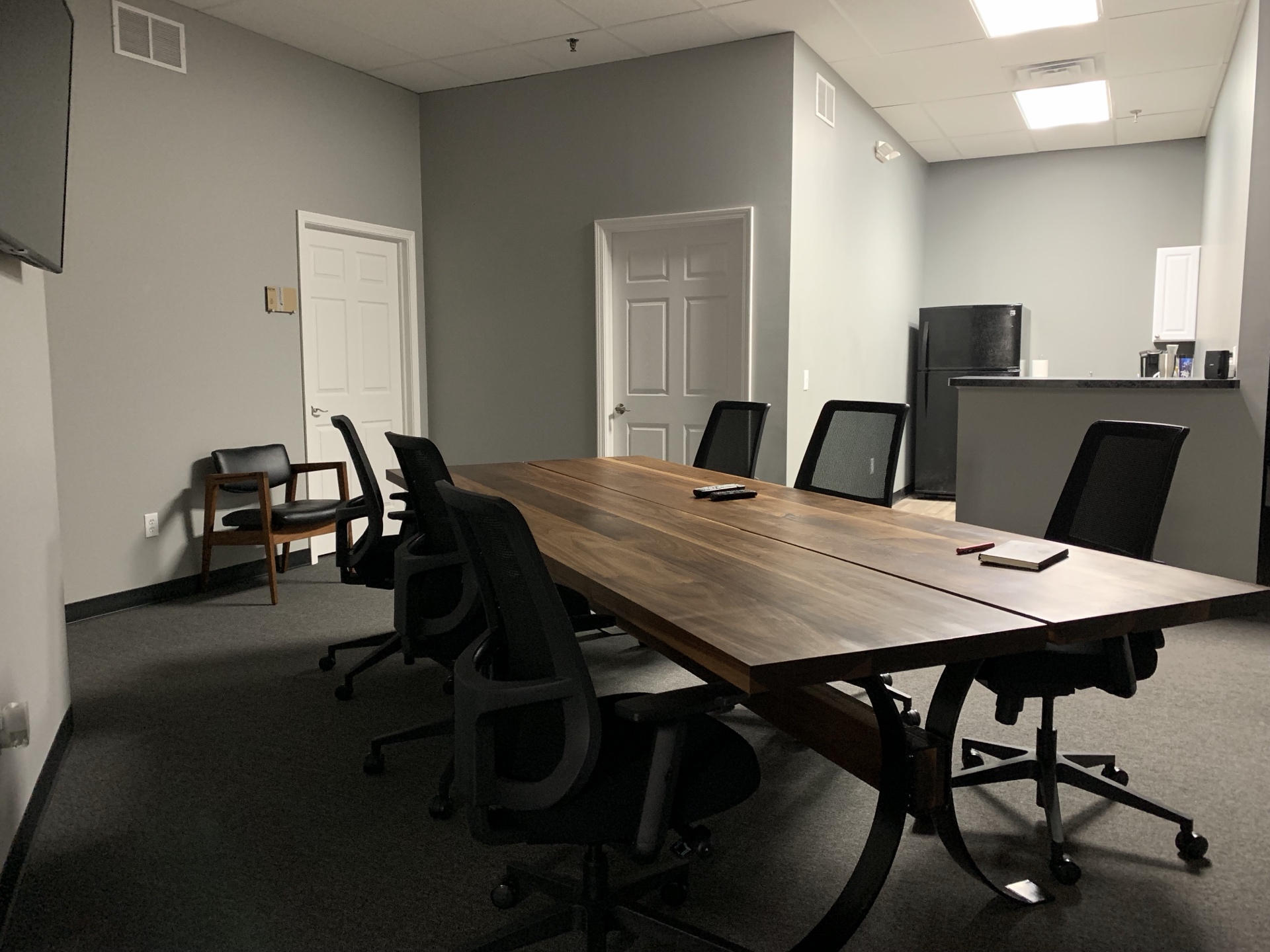
02 · Make the Proportions Feel Inevitable
A clean span comes from the whole design.
A large walnut top can appear open and effortless when the grain, top thickness, support system, base placement, and seating layout are considered together. The point is not to pretend a table has no support. It is to keep the support quiet, purposeful, and in proportion to the top above it.
That is where the timeless mid-century influence is most useful: clear lines, honest material, and no visual clutter competing with the room’s most important piece of furniture.
03 · Design for a Life Beyond the First Install
The table should age into the space.
A modern-day heirloom is not defined by an old-fashioned look. It is defined by the care taken with material, proportion, and construction—and by the fact that the table remains worth living with as an office evolves. A finish, edge treatment, and base should all support that longer view.
For executive offices, conference rooms, and large dining spaces, walnut offers a rare balance: it can feel refined without being fragile, and expressive without becoming loud. The exact result remains personal to the project, which is why an early materials conversation is so valuable.
Choose the Table, Not a Template
Use the room to guide the material.
The Custom Table Brief gives you a clear starting point for material direction, room measurements, seating, base style, finish, investment, and timing. It is built for people considering a table with a real place in their home or office—not a piece chosen from a catalog.
Reference