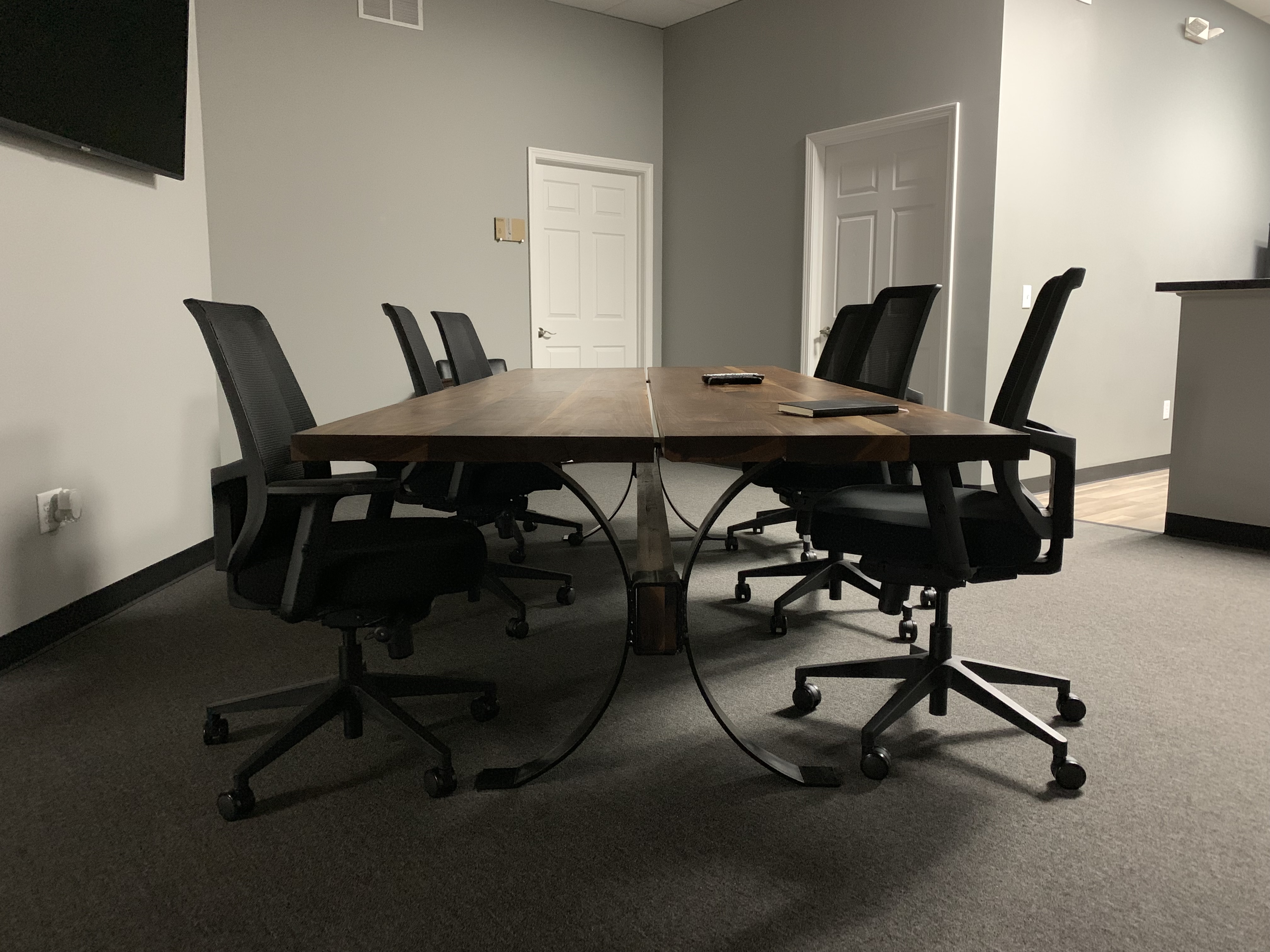
The top may catch the eye. The base gives the table its confidence.
On a large conference table, the base is never a secondary decision. It determines how the piece meets the floor, how chairs gather around it, where the eye rests, and how the tabletop seems to span the room. A trestle base provides a clear, honest design language: upright supports, connected by a horizontal member, working together as one composed structure.[1]
Visual role
A sculptural center that gives a long top a clear anchor
Practical role
A base tailored around seating, legroom, and room use
Design role
Support that stays present without becoming visual clutter
01 · A Clear Architectural Center
The trestle is the calm in a long composition.
A trestle base reads as a deliberate center rather than a collection of legs scattered along a long top. It gives the eye a point of order beneath the grain, so the tabletop can remain the visual field that defines the room.
That clarity is why the form works so well with a modern-day heirloom approach. It can feel traditional in its underlying idea while becoming distinctly current through proportion, detail, material, and restraint.
02 · Support the People, Not Just the Top
Chair placement belongs in the drawing.
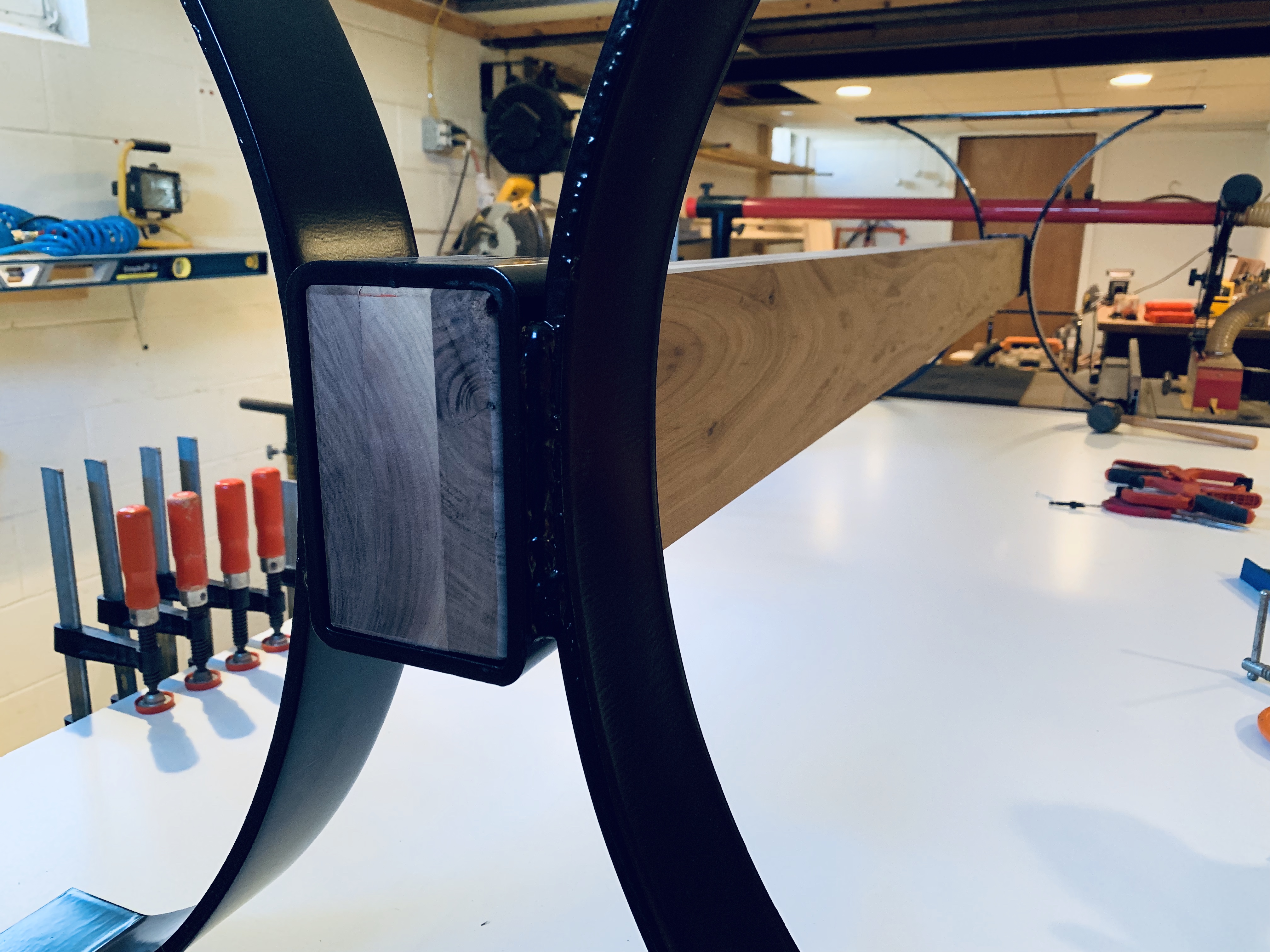
Trestle-style supports are commonly inset from the table ends, which can help create usable end seating when the proportions are designed for the project.[2] But there is no universal base layout: chair footprints, overhang, stretcher height, access needs, and the way the office meets all shape the final approach.
The right question is not “Will a trestle base always give me more legroom?” It is “Where do people need to sit, move, and work—and how should the base respond?” A custom commission makes that question part of the design rather than an awkward compromise after delivery.
03 · Keep the Span Visually Clean
Support can be purposeful without being unsightly.
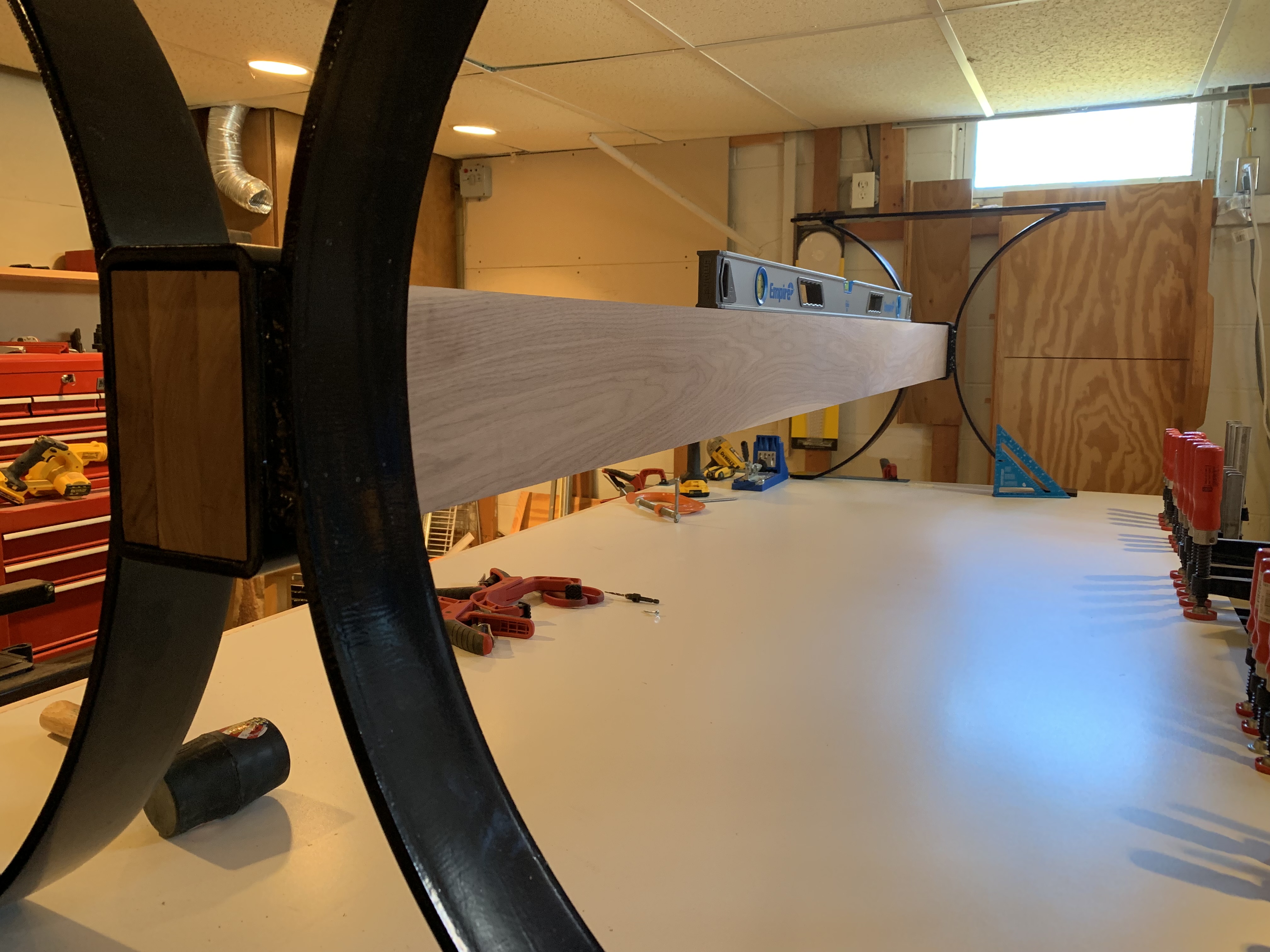
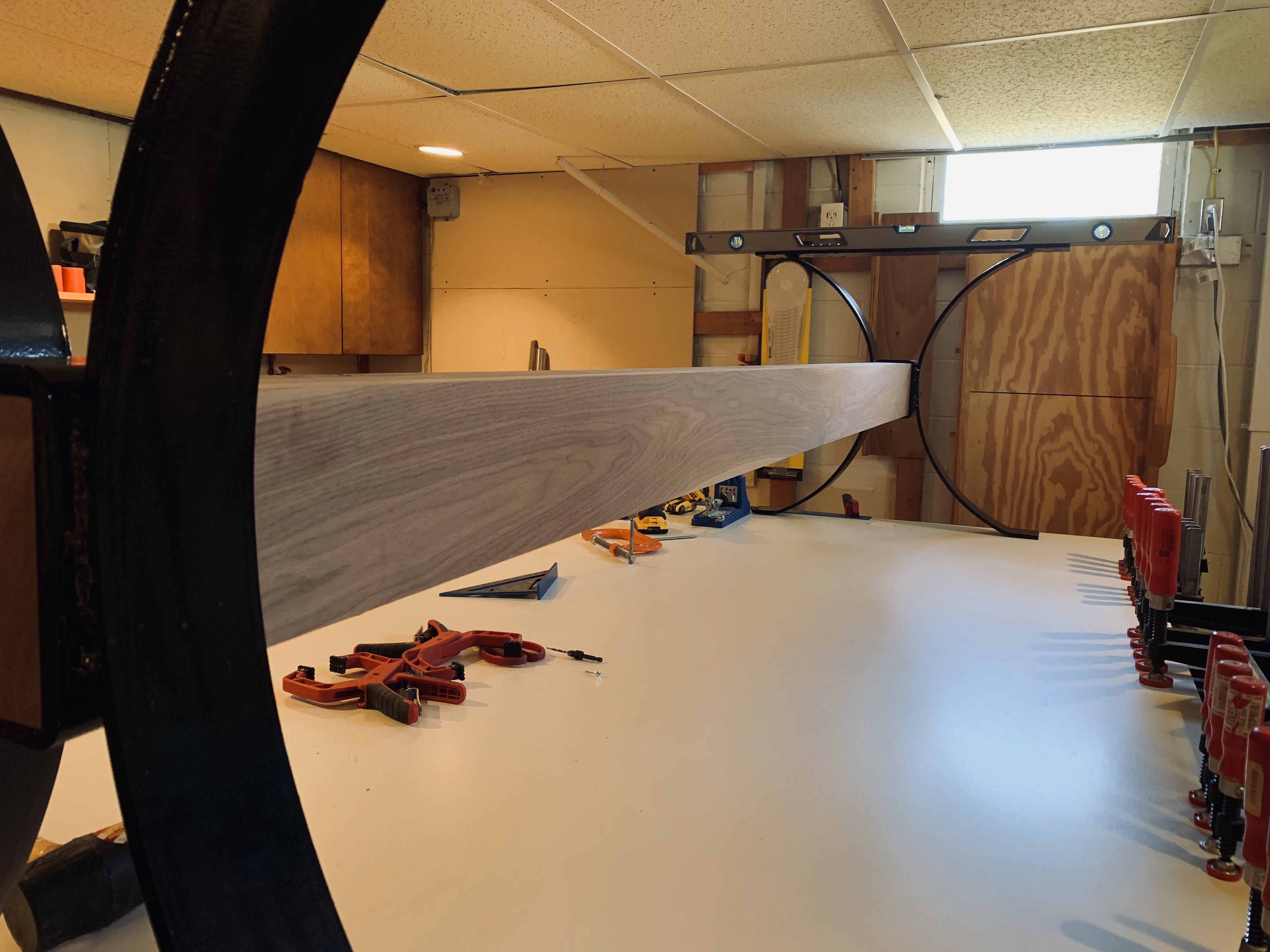
With a broad walnut surface, it is tempting to let the top become the only conversation. A trestle base creates the opposite effect: it makes the whole table more legible. The base adds rhythm, the top carries the grain, and the space around both stays open enough for the furniture to breathe.
This is especially important in a conference room. Cables, screens, chairs, and people already create visual activity. The base should bring order, not add another distraction. In the right design, its strength is felt more than announced.
A Base Worth Discussing Early
Choose the support system with the room in mind.
The Custom Table Brief gives you a place to organize the first decisions: room measurements, seating, material direction, table shape, finish, technology, investment, and timing. From there, the base can become an integrated part of the piece—not a detail left until the end.
References
[1] Greg Pilotti Furniture Makers, “Conference Table Base Options.”