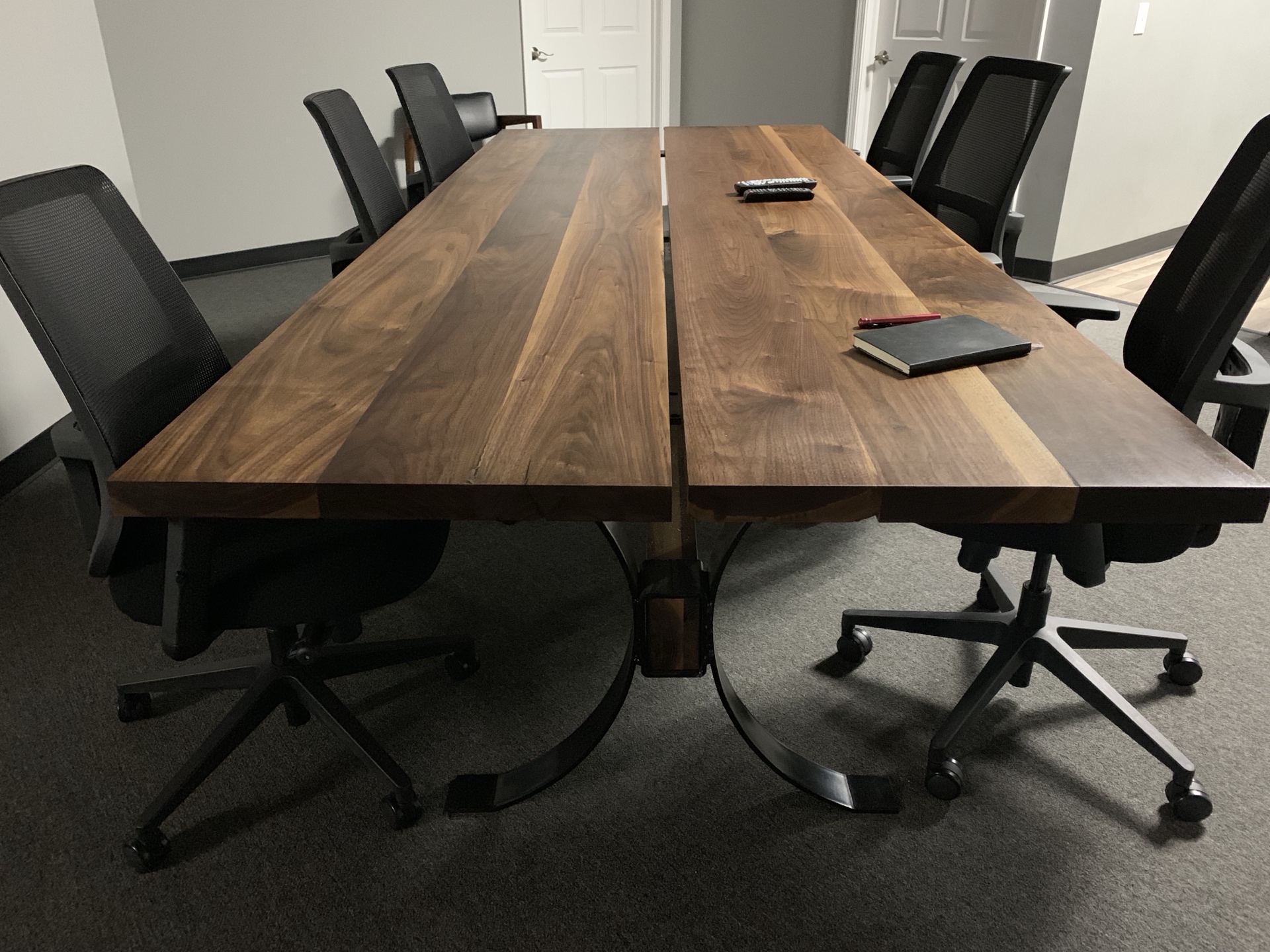
The goal is not to fill a room. It is to define it.
A custom conference table has work to do. It needs to make room for decisions, laptops, screens, and the people making first impressions across the surface. But it should also establish the tone of the office: warm, composed, and quietly confident. The strongest commissions begin with a few practical decisions made in the right order.
01 · Begin With the Meeting
Know what happens at the table.
Start with the team’s normal meeting, not only its rare largest gathering. Is the room used for focused leadership sessions, collaborative working meetings, client presentations, or a little of everything? That answer guides the seating, shape, surface area, and level of technology the table should accommodate.
Bring the real chair footprint into the first conversation. A tailored base should preserve legroom and natural chair placement, while the tabletop gives people enough working surface to be present without feeling packed together.
Room brief
Dimensions, doors, windows, built-ins, and delivery access
Meeting brief
Everyday attendance, chairs, laptops, and presentations
Material brief
Walnut character, edge, base, finish, and overall tone
02 · Let the Room Shape the Table
Measure what the table must coexist with.
Draw the room before refining the table. Record the dimensions, doors and their swings, windows, fixed cabinetry, columns, screens, outlets, and the route through which the finished table must travel. A custom piece earns its place by responding to these details, rather than asking the room to accept a standard footprint.
Keep circulation and access in view from the beginning. The finished room should let people take a seat, step away, present, and move through the space with ease. For a deeper starting point on fitting 10–12 people, read the conference table sizing guide.
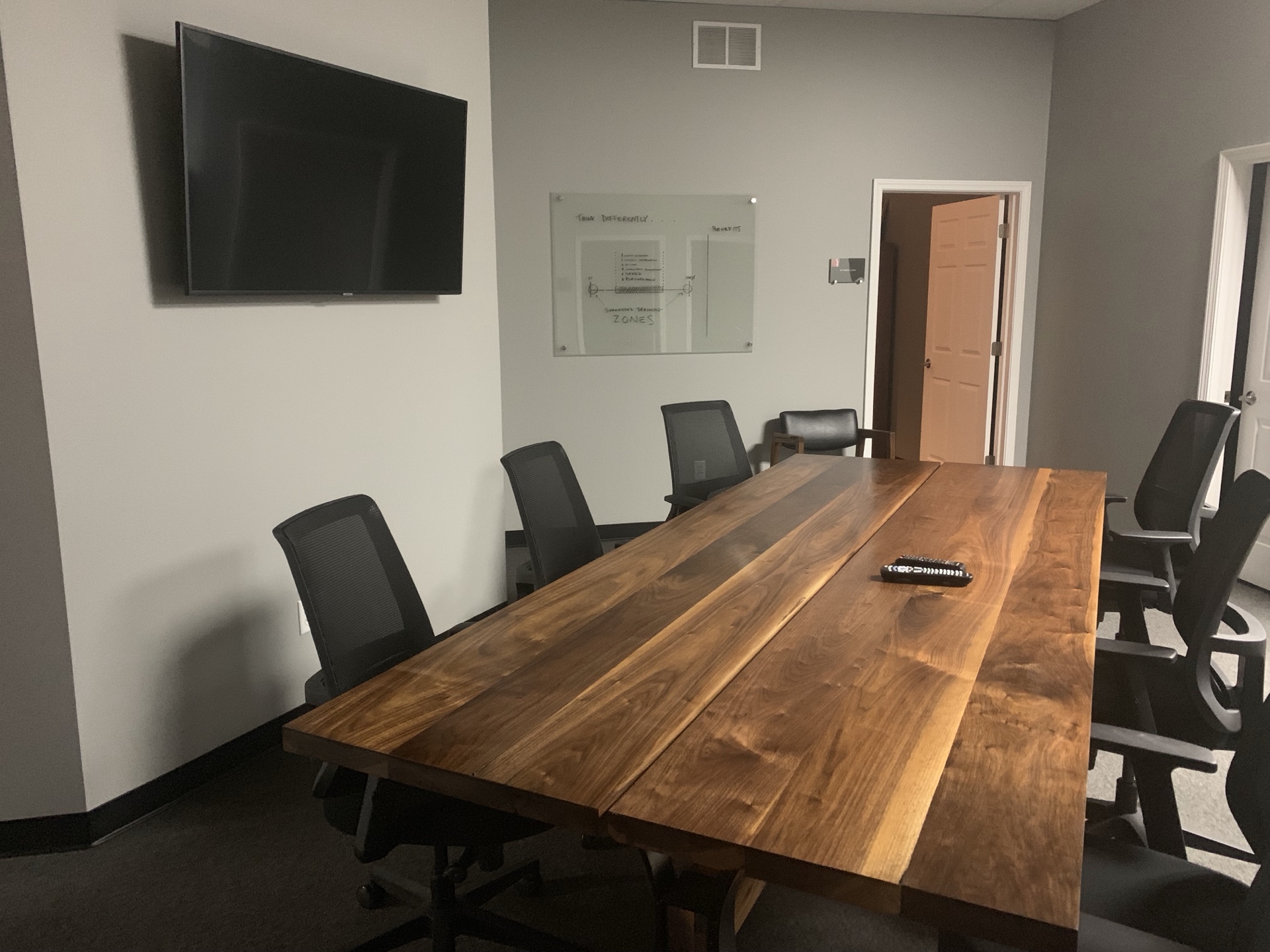
03 · Choose the Character, Not Just the Species
Walnut brings warmth without asking for attention.
American black walnut is chosen here for its warmth, rich figure, and quiet authority. The result can move from tailored and architectural to more expressive and organic, depending on the selected boards, edge direction, finish, and base.
The aim is a timeless mid-century sensibility: clean lines, honest material, and proportion that holds up long after trends fade. A large tabletop should carry visual weight with support that remains quiet and purposeful—never an unsightly interruption beneath the surface.
04 · Plan Technology Before the Build Begins
Keep the function present, not visible.
Power modules, cable paths, screens, cameras, microphones, and access points deserve an early discussion. When they are part of the original brief, a conference table can support modern meetings without letting the equipment dominate the furniture.
That early coordination also protects the design. The material, top thickness, base, and access locations can be considered as one integrated composition instead of being adjusted after decisions are already locked in.
Your Next Step
Arrive with the right questions.
The Custom Table Brief organizes the first conversation around seating, room measurements, walnut character, support direction, finish, investment, and timing. Locust Hill Customs schedules four signature conference-table commissions each year, one deliberate build cycle per quarter.